
Christmas feels different—not just emotionally, but biologically too. The warmth we feel during this season has a scientific explanation hidden deep inside our brain and body.
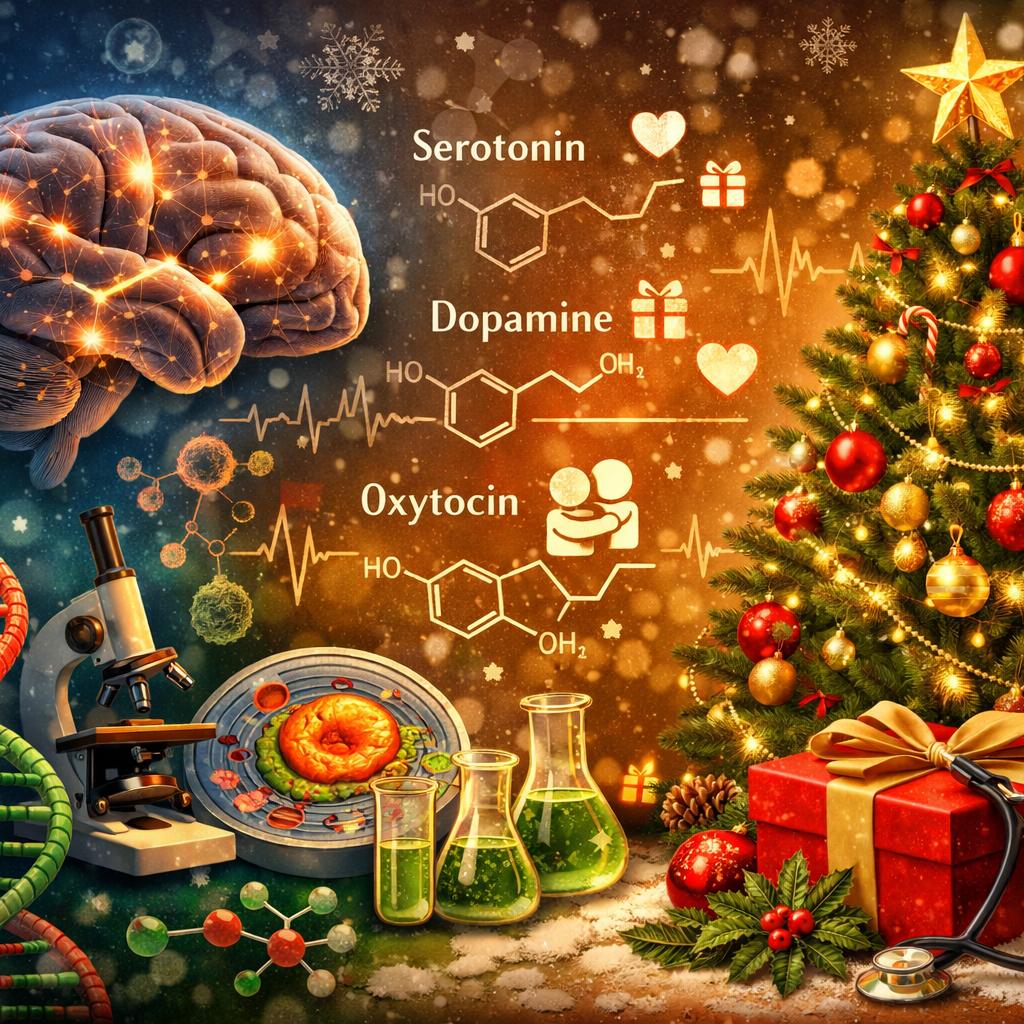
When we hear festive music, receive a gift, or even smile at family moments, dopamine is released. It’s the brain’s reward chemical, making us feel excited and motivated—like the joy of unwrapping presents or achieving something meaningful.
Serotonin plays its role by creating a sense of calm and contentment. Cozy gatherings, shared meals, and moments of gratitude boost serotonin levels, helping us feel peaceful and emotionally balanced during the holidays.
Then comes oxytocin, often called the bonding hormone. Hugs, kindness, sharing, and togetherness increase oxytocin, strengthening relationships and reminding us why human connection matters so much—especially at Christmas.
So when we say Christmas spreads joy, it’s not just poetry—it’s biology in action. 🎄
Our bodies respond to love, kindness, and connection in the most scientific way possible.
This Christmas, celebrate not only the season—but also the beautiful biology that allows us to feel joy, warmth, and togetherness. 🧬✨
Add a Comment