
 Cart is empty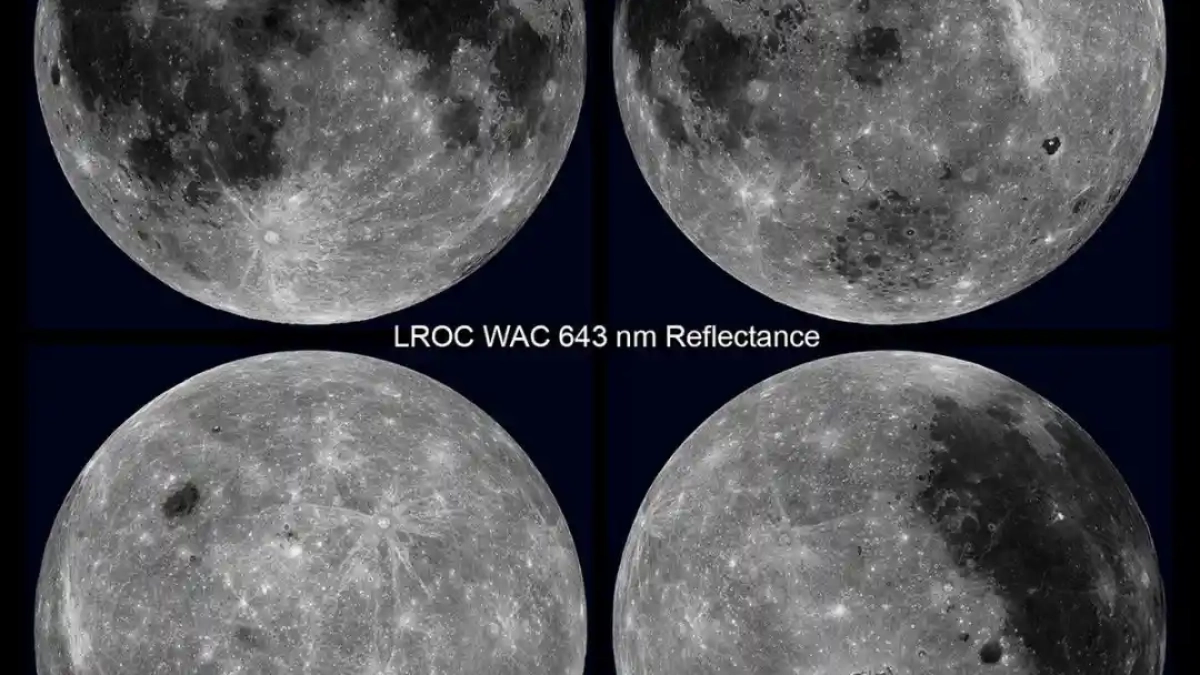
Why We Don’t See the Other Side of the Moon
The Mystery of the Moon’s Hidden Side
Have you ever looked up at the Moon and wondered why it always seems to show the same face to Earth? For centuries, people have been fascinated by this celestial neighbor and have asked the same question: Why don’t we see the other side of the Moon?
The answer lies in a fascinating astronomical phenomenon known as tidal locking. Contrary to popular belief, the Moon does rotate. However, it rotates in a very special way that causes the same side to always face Earth.
Does the Moon Rotate?
Many people assume that the Moon does not rotate because we always see the same features on its surface. In reality, the Moon rotates on its axis once every 27.3 days. Interestingly, it also takes about 27.3 days to complete one orbit around Earth.
Because the Moon’s rotation period and orbital period are the same, the same hemisphere remains pointed toward Earth at all times. This synchronization is called tidal locking.
If the Moon did not rotate, we would eventually see all sides of it as it orbited our planet.
What Is Tidal Locking?
Tidal locking occurs when the gravitational pull of a larger object gradually slows the rotation of a smaller object until its rotational period matches its orbital period.
Billions of years ago, the Moon likely rotated much faster. Earth’s gravity created tidal forces within the Moon, causing friction that slowly altered its rotation. Over time, the Moon settled into a stable state where one side permanently faces Earth.
This process is common throughout the universe. Several moons in our solar system are tidally locked to their planets.
Is There Really a “Dark Side” of the Moon?
The term “dark side of the Moon” is often misunderstood. The far side of the Moon is not permanently dark.
Just like the side facing Earth, the far side receives sunlight for roughly half of each lunar month. It experiences day and night cycles similar to the near side.
A more accurate term is the far side of the Moon, because it is simply the side that normally faces away from Earth.
Have Humans Ever Seen the Far Side?
Yes. Although people on Earth cannot see the far side directly, spacecraft have photographed it extensively.
In 1959, the Soviet spacecraft Luna 3 became the first mission to capture images of the Moon’s far side. The photographs revealed a landscape very different from the side visible from Earth.
Later missions provided detailed maps and high-resolution images, helping scientists better understand the Moon’s geology and history.
What Does the Far Side Look Like?
The far side of the Moon contains many more craters and fewer large dark plains, known as maria, than the near side.
Scientists believe this difference may be related to variations in the Moon’s crust thickness and geological history. The near side has vast lava plains that were formed by ancient volcanic activity, while the far side remains more heavily cratered.
Can We Ever See More Than 50% of the Moon?
Surprisingly, yes.
Due to a phenomenon called libration, slight changes in the Moon’s position and orientation allow observers on Earth to glimpse a little beyond the edges of the visible hemisphere over time.
As a result, we can actually observe about 59% of the Moon’s surface from Earth, although never all at once.
Why Is This Important?
Understanding why we only see one side of the Moon helps scientists learn about gravity, orbital mechanics, and the history of our solar system. The Moon serves as a natural laboratory for studying how celestial bodies interact over billions of years.
The study of tidal locking also helps astronomers understand distant planets and moons orbiting other stars.
Conclusion
We do not see the other side of the Moon because the Moon is tidally locked to Earth. It rotates on its axis at exactly the same rate that it orbits our planet, ensuring that the same face always points toward us. The far side is not permanently dark—it receives sunlight just like the side we see. Thanks to modern space missions, scientists have explored and photographed this hidden hemisphere, revealing a fascinating world that remained a mystery for much of human history.
The next time you look at the Moon, remember that an entire hidden landscape is traveling around Earth with it—always there, yet rarely seen.
For broader context, review external background resources about this topic.
Read more on our site in the Space category archive.
Add a Comment